Quick Answer
Microprismatic reflective sheeting used for traffic signs, road markings, delineators and work zone devices returns headlight beams to the driver at long range and at wide viewing angles, so a sign stays readable on a curve, at highway speed or from a truck cab, where lower grades fade out.
Quick-Answer Comparison Table
| Sign application |
Grade direction |
Why it matters |
| Permanent highway guide and warning signs |
High intensity to prismatic microprismatic |
Recognisable at long viewing distance and on curves |
| Regulatory and urban signage |
Engineering to high intensity |
Cost-effective where speeds and distances are lower |
| Work zone and temporary signs |
High intensity microprismatic |
Brightness plus toughness for repeated deployment |
| Delineators, object markers, barrier boards |
High intensity |
Keeps the whole sign assembly readable as one system |
What Is Microprismatic Reflective Sheeting?
Microprismatic reflective sheeting is a retroreflective film built on an array of tiny cube-corner prisms behind a protective surface layer and backed with a pressure-sensitive adhesive that makes it a Self Adhesive Microprismatic Reflective Sheeting ready for direct application to sign blanks and panels. Each microprism acts as a corner reflector: incoming light is bounced off three perpendicular faces and returned close to its source. Instead of spreading light like a mirror, the sheet sends it back to the driver — which is what makes it a safety material rather than a decorative one.
Microprismatic vs. Glass Bead Sheeting
In glass bead sheeting, light refracts through transparent spheres and reflects off a backing layer. Microprismatic sheeting uses three internal reflections inside a molded prism instead. Three practical differences follow:
| Factor |
Glass bead |
Microprismatic |
| Brightness at distance |
Falls off noticeably |
Higher and retained further out |
| Wide observation angles |
Limited |
Strong — matters on curves and multi-lane roads |
| Relative cost |
Lower |
Higher per square metre |
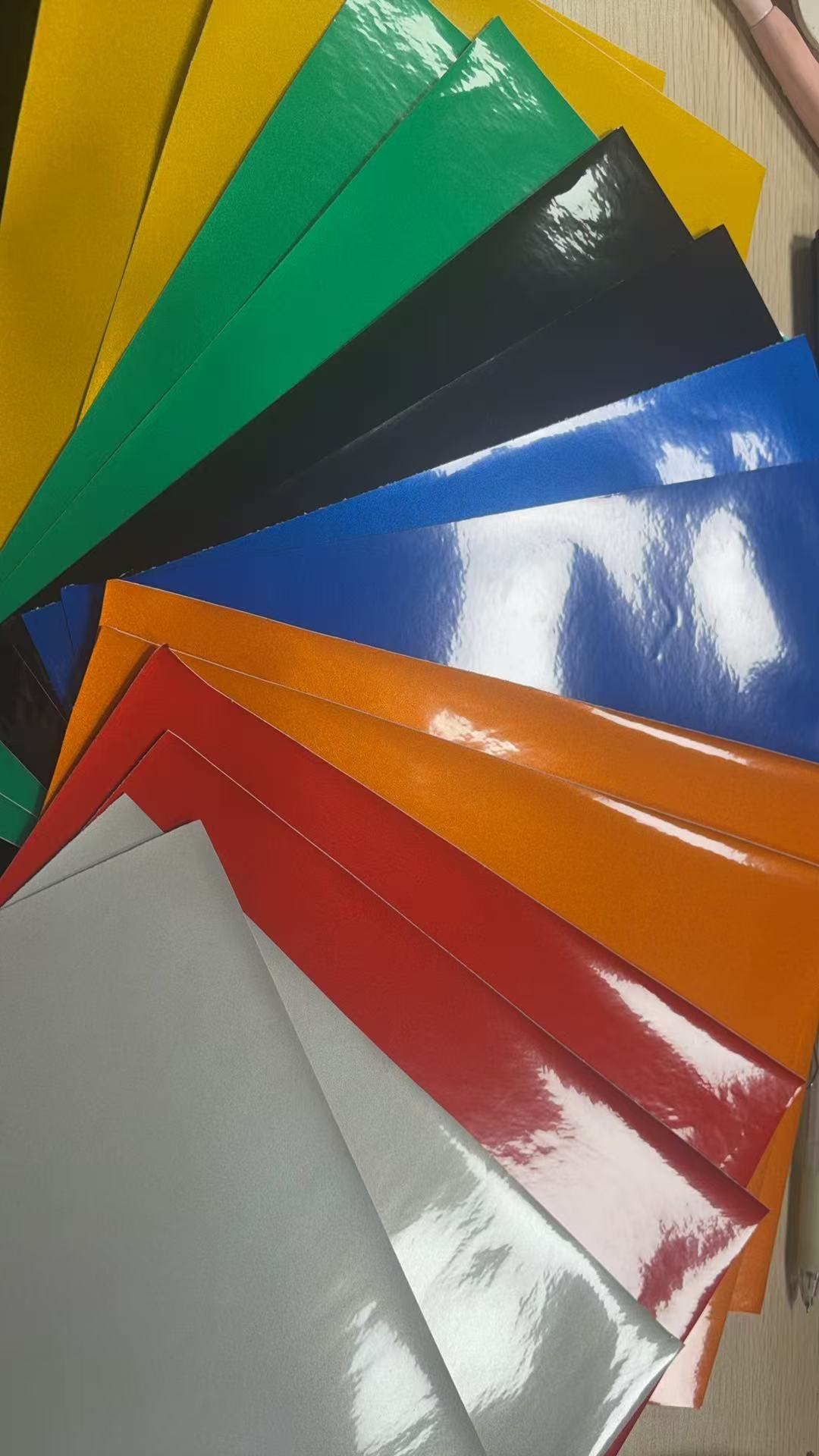
Glass bead films remain a sound, economical choice for short viewing distances and low-speed roads. Where viewing distance, speed or viewing angle demand more, High intensity prismatic reflective sheeting is the usual specification. On most road networks the two are used side by side, matched to different parts of the same route.
Where Microprismatic Sheeting Is Used on Traffic Signs
Permanent guide, warning and regulatory signs are the largest application. The sign face, posts, delineators and object markers are usually specified in the same material family so the whole installation reads as a single system at night. On high-speed roads and interchanges, HIP reflective sheeting for traffic sign applications is specified because the driver must recognise and act on the message within a short time window.
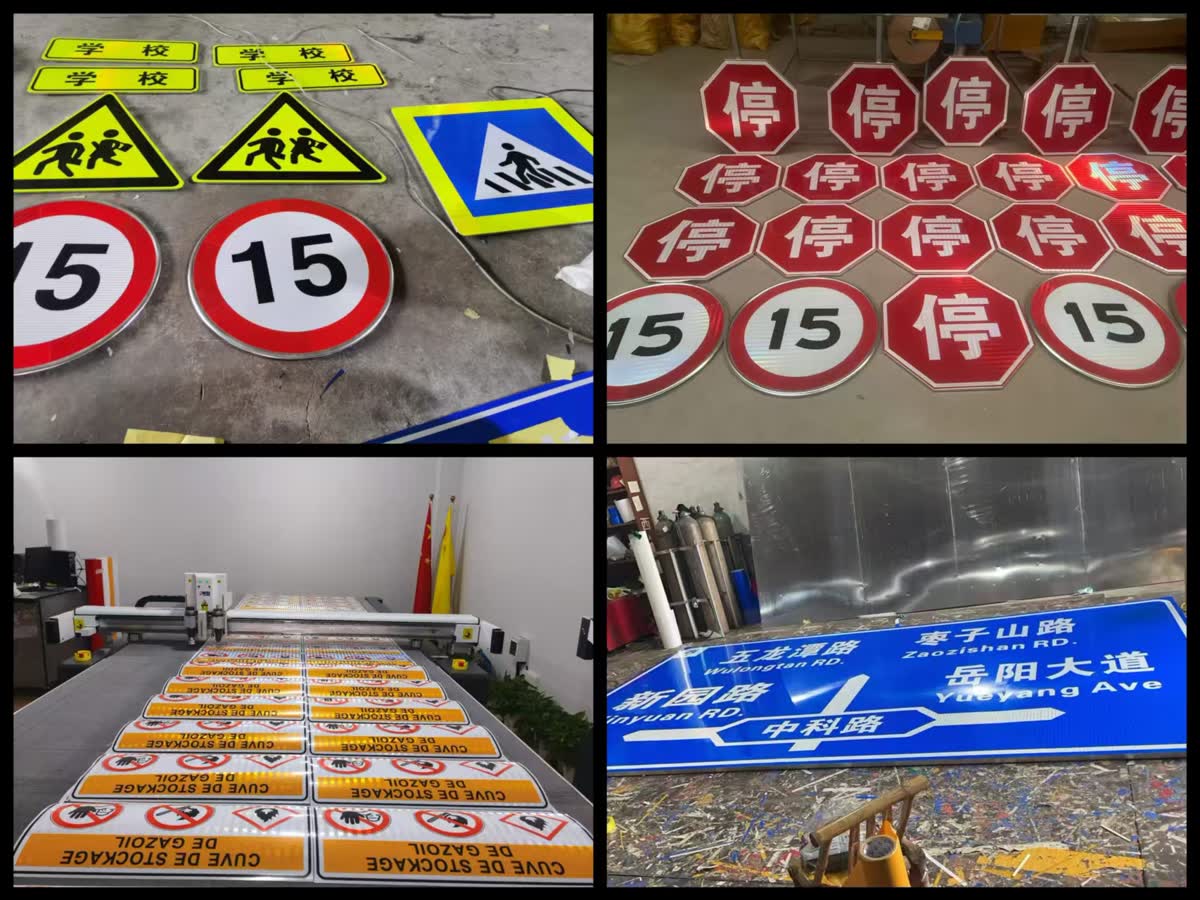
Work zone safety signage is a distinct sub-application. Temporary signs, drums, barrier boards and channelizing devices are deployed, struck, cleaned and redeployed, so Prismatic Reflective Sheeting for Warning Safety must combine brightness with mechanical toughness and reliable adhesion on plastic, aluminium and flexible substrates.
Delineators, object markers and barrier boards rely on microprismatic film to define the edge of the road and the shape of a hazard. Here, consistent colour and angle performance across a large number of small units matters more than maximum brightness.
The same material class is also used for vehicle conspicuity marking, high-visibility clothing and industrial wayfinding, but traffic signage remains its dominant and most specification-driven use.
Specifications Engineers and Buyers Should Verify
Traffic sign retroreflection performance is where specifications earn their keep — the four points below decide whether a sign performs in service.
Coefficient of retroreflection and brightness grade. Performance is quoted in candelas per lux per square metre, reported separately for each colour and each combination of observation and entrance angle. Two films carrying the same grade name can differ by colour, so request the data table rather than the label alone.
Observation and entrance angle. Observation angle is the separation between the light source and the viewer; entrance angle is how far the sign is turned away from oncoming traffic. Both widen as distance increases. A film that performs well head-on may fall away at wide angles — exactly the condition a driver on a curve or in a truck cab experiences. Specify the angles your installation actually produces.
Durability and service life. Treat service life as an application-dependent range affected by grade, colour, climate, exposure direction and cleaning, not a single figure. Manufacturers publish multi-year expectations for prismatic traffic grades under defined conditions; the warranty terms and reference test methods are what govern your maintenance planning.
Adhesive and substrate compatibility. Confirm recommended substrates (bare and painted aluminium, galvanised steel, plastics), the surface preparation required, the application temperature range, and whether a primer or edge sealer is advised. Substrate mismatch and cold application are among the most common causes of premature edge lifting.
Typical Scenario
An illustrative composite, written to show the selection logic.
A road authority replaces ageing signs on a high-speed route. The specification shifts from a glass bead grade to high intensity prismatic reflective sheeting on the sign faces, with matching material on posts and delineators. The deciding factors are recognition distance at highway speed and brightness at wide viewing angles on a curve. In the contractor's experience, performance was never the problem — the risk sat in sealing the edges of larger panels and in holding application temperature steady during a cold-weather installation window.
Selection and Procurement Checklist
| Item |
What to ask for |
| Grade and colour |
Retroreflection data at your observation and entrance angles |
| Compliance |
The exact specification the product is qualified against, plus test documentation |
| Adhesive |
Recommended substrates, primer and edge sealer, application temperature range |
| Format |
Roll width and length, sheets, custom cutting, MOQ and lead time |
| Warranty |
Coverage period, exclusions and reference test methods |
Purchase price per square metre is the smallest part of the comparison. Labour, preparation time, failure risk and replacement interval usually outweigh the film cost difference, and a slightly more expensive film that adheres reliably in cold weather can cost less across its service life.
Frequently Asked Questions
What is microprismatic reflective sheeting mainly used for?
Traffic signs, road markings, delineators and work zone devices are the dominant uses, followed by vehicle conspicuity marking, high-visibility clothing and industrial wayfinding.
Is microprismatic sheeting better than glass bead sheeting?
It is brighter at long distance and at wide viewing angles, which suits highways, curves and work zones. Glass bead sheeting remains cost-effective for short distances and low-speed roads. The choice is a grade-to-application match, not a universal winner.
How long does it last outdoors?
It depends on grade, colour, climate, exposure direction, cleaning and application quality. Manufacturers publish multi-year expectations under defined conditions, but warranty terms and your own maintenance records are the reliable basis for planning.
Can it be applied in cold weather?
Application must take place within the film's stated temperature range, and the substrate — not just the air — must be at that temperature. On cold metal panels this usually means allowing extra time, shelter or heating before installation.
Does it meet traffic safety standards?
Compliant products are qualified against recognised sheeting and fixed-sign specifications, and the relevant national standard in your market. Ask the supplier to state the exact specification the product is qualified against and to provide the test documentation behind it.
What should I include in a purchase specification?
Viewing distance, speed environment, required grade and retroreflection values at defined angles, colour, substrate, roll or sheet format, compliance documents, warranty terms and delivery schedule.
Key Takeaways
- Microprismatic reflective sheeting solves a distance and angle problem. Cube-corner optics return light to the driver at long range and at wide viewing angles where glass bead films fall away.
- Match the grade to the sign, not to the price list. High-speed and curve applications justify high intensity prismatic grades; short-distance, low-speed signage often does not.
- Data beats labels. Request retroreflection values by colour and by the observation and entrance angles your installation actually produces.
- Compliance needs paperwork. Ask which specification the product is qualified against and for the test documentation behind the claim.
- Installation decides real life. Substrate preparation, application temperature and edge sealing determine whether a good film performs as specified.
- Compare total cost, not unit price. Labour, failure risk and replacement interval usually outweigh the difference in film cost per square metre.
Next Steps
If you are specifying or sourcing Reflective Sheeting For Traffic Sign projects, the fastest way to remove risk is to test the material against your actual application. We can supply samples, technical specification sheets, retroreflection data and volume pricing so your team can validate performance on a real substrate before committing to a programme. Tell us your application, viewing conditions and substrate, and we will recommend the grade that fits it.

 لغة
لغة